
VITI OBS phase 2: Vinovalie continues its transition towards sustainable viticulture
The VITI OBS project is entering a new phase to accelerate the transition towards a more sustainable and environmentally responsible approach to viticulture.
What is the VITI OBS project?
The VITI OBS project is a programme led by the Vinovalie cooperative to reduce the use of plant protection products in vineyards. Launched in partnership with INRAE and the Institut Français de la Vigne et du Vin (IFV), with the support of the Occitanie Region, the project spans 8 years: a first phase from 2020 to 2024 and a second phase from 2024 to 2027.
Its main objective is to test and validate more environmentally friendly vine protection methods, while preserving the technical and economic viability of wine-growing operations.
How does the field experimentation work?
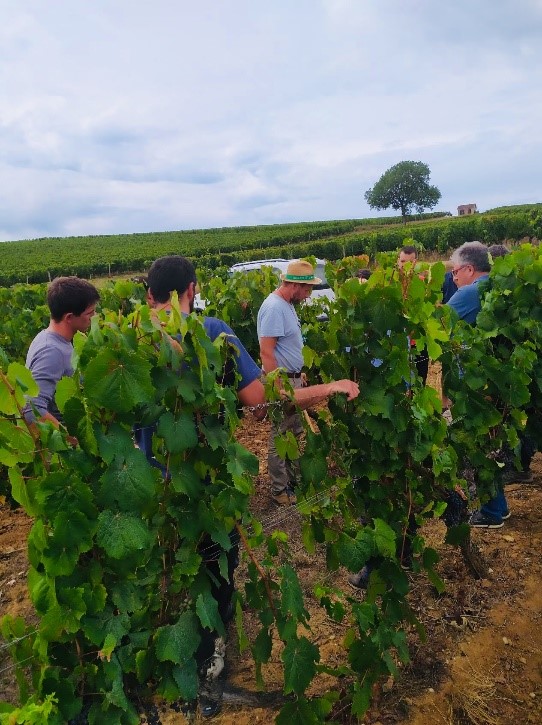
VITI OBS is based on a collaborative experimental framework carried out directly with wine growers. Around twenty volunteer growers from the Vinovalie cooperative took part in the first phase of the project. Each of them dedicated a plot of their vineyard to the experiment: half is managed under a new treatment programme, while the other half serves as a control, retaining the standard plant protection programme.
This direct comparison approach allows the effects of the new treatment programme to be accurately assessed against conventional methods, under identical vineyard conditions.
Throughout the season, Mickaël Perez, project manager at Vinovalie, and the wine growers record their interventions in a health monitoring log. Regular observations are carried out to measure the onset of diseases (downy mildew, powdery mildew, black rot, etc.).
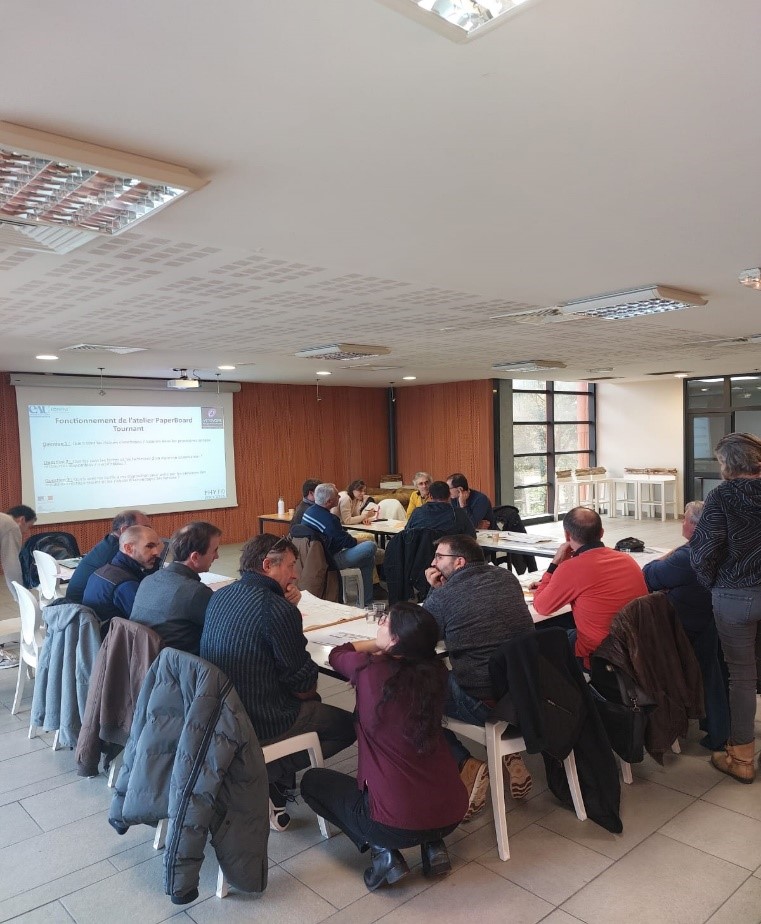
At harvest time, yield measurements are taken, micro-vinifications are conducted with the IFV, and analyses check for any potential pesticide residues in the wine. At the end of each season, project partners meet in participatory workshops to draw lessons from the season and adjust the technical approaches if necessary.
This participatory model, rolled out over several years, makes VITI OBS a genuine in-situ experimental observatory of the agroecological transition across the entire Vinovalie territory.
What are the objectives of Phase 2 ?
Building on four years of experimentation, Vinovalie and its partners chose in 2024 to launch a second phase of the VITI OBS project, with a more targeted approach centred on two technical pathways:
- organic farming (AB)
- integrated pest management
In organic farming, partners are continuing the work begun in Phase 1, with the aim of not exceeding 2 kilograms of copper per hectare per year.
In integrated pest management, the objective is to use synthetic products only as a last resort, prioritising as much as possible the biocontrol products studied during the first phase.
Why renew the project ?
Because the challenges have become more clearly defined, and the ambitions more precise.
The regulatory landscape has evolved rapidly since the launch of VITI OBS. Some active substances used in conventional approaches, such as metiram, have been withdrawn from the market. This shift requires an adaptation of plant protection strategies, both in terms of product selection and their timing and organisation.
The aim of this new pathway remains ambitious: to reduce the Treatment Frequency Index (TFI) by 50% in conventional farming, in anticipation of future restrictions — a target not yet reached at the end of the first phase, despite clear progress.
Finally, the climatic conditions of recent years, which have been particularly favourable to disease development, have complicated the experiments. In organic farming, one fungal disease has been causing significant problems: black rot. Despite rigorous management, this disease remains one of the main obstacles to reliable yields in organic viticulture. Phase 2 of VITI OBS therefore aims to develop an effective strategy against black rot.
This new phase of the project seeks to consolidate successes, overcome the remaining technical obstacles and pave the way for a viticulture that is ever more respectful of the environment, while also being more resilient in the face of tomorrow's challenges.